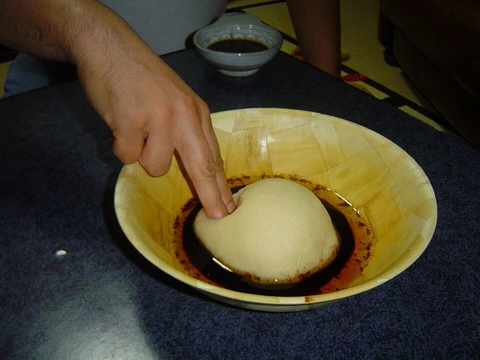
Asida
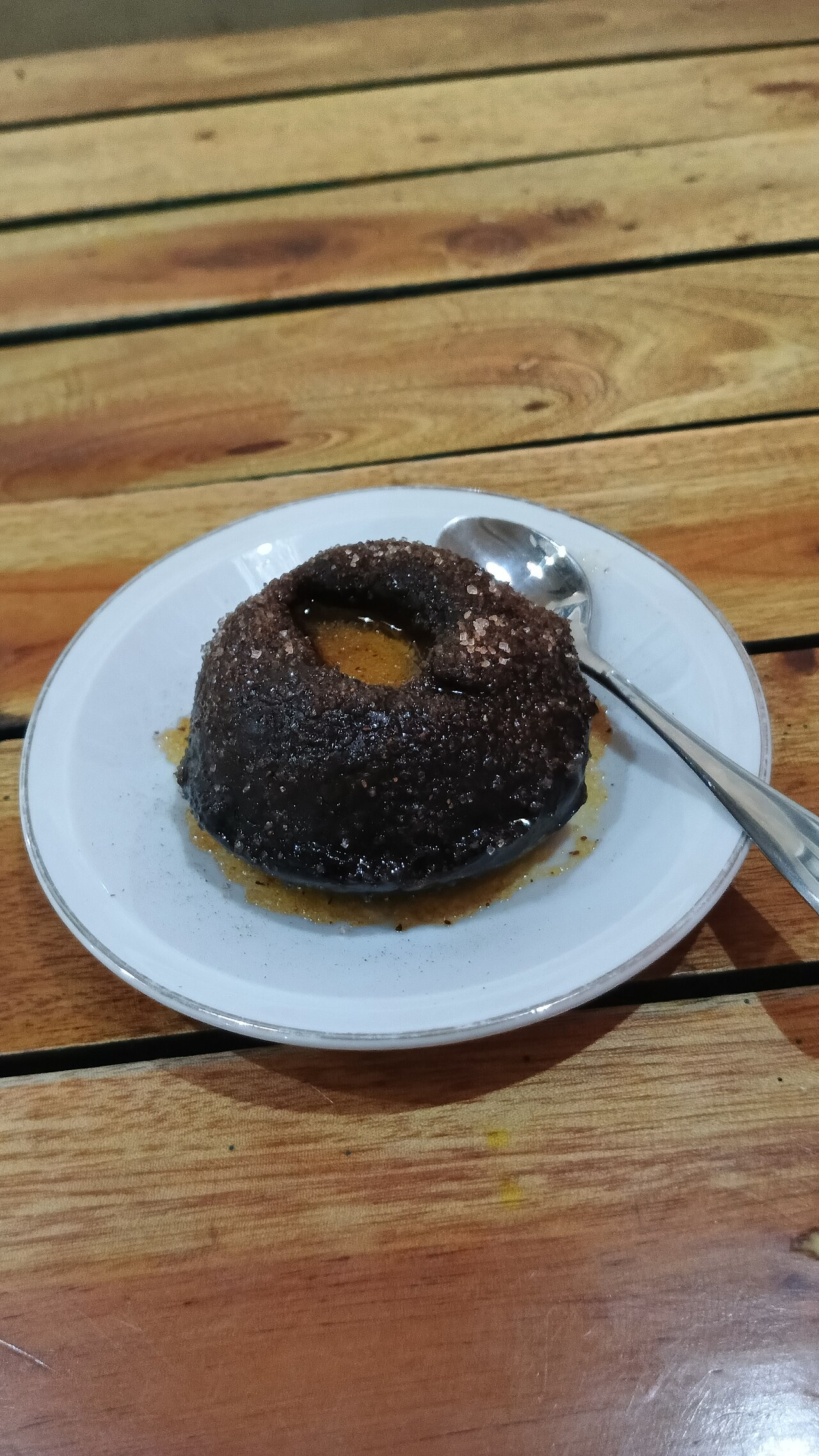
A traditional Arab dough dish served at religious and family ceremonies.

Hzu · CC BY-SA 4.0
Asida (Arabic: عصيدة, or Maghrebi ġsydë) is a doughy dish made by stirring wheat flour into boiling water, sometimes enriched with butter or honey. Its texture is similar to fufu, and it is widely eaten across the Middle East and Africa, where it ranks among the best-known traditional desserts and everyday dishes in many Arab countries.
This dish is especially common in Sudan, Morocco, Libya, Algeria, Tunisia, Yemen, Ethiopia, Eritrea, and elsewhere in the Middle East. It is often served during religious holidays like Mawlid and Eid, as well as at traditional ceremonies such as the ‘aqīqah—the cutting of a newborn’s hair seven days after birth. A simple but rich meal, asida is usually eaten on its own, traditionally at breakfast, and is also given to women in labor.
The name asida comes from the Arabic root عصد (ʿ-ṣ-d), which relates to twisting or kneading. One of the earliest recorded recipes appears in a tenth-century Arabic cookbook, *Kitab al-Ṭabīḫ* (The Book of Dishes) by Ibn Sayyar al-Warraq, which describes it as a thick pudding of dates cooked with clarified butter (samn). Another recipe appears in an anonymous 13th-century Hispano-Muslim cookbook. In the 13th and 14th centuries, in the Rif mountains along Morocco’s Mediterranean coast, flour made from lightly grilled barley was used instead of wheat. Leo Africanus (c. 1465–1550), the Berber explorer known as Hasan al-Wazan, documented a version made with argan seed oil. According to French scholar Maxime Rodinson, asida was a typical food among pre-Islamic Bedouins and likely continued in later times.
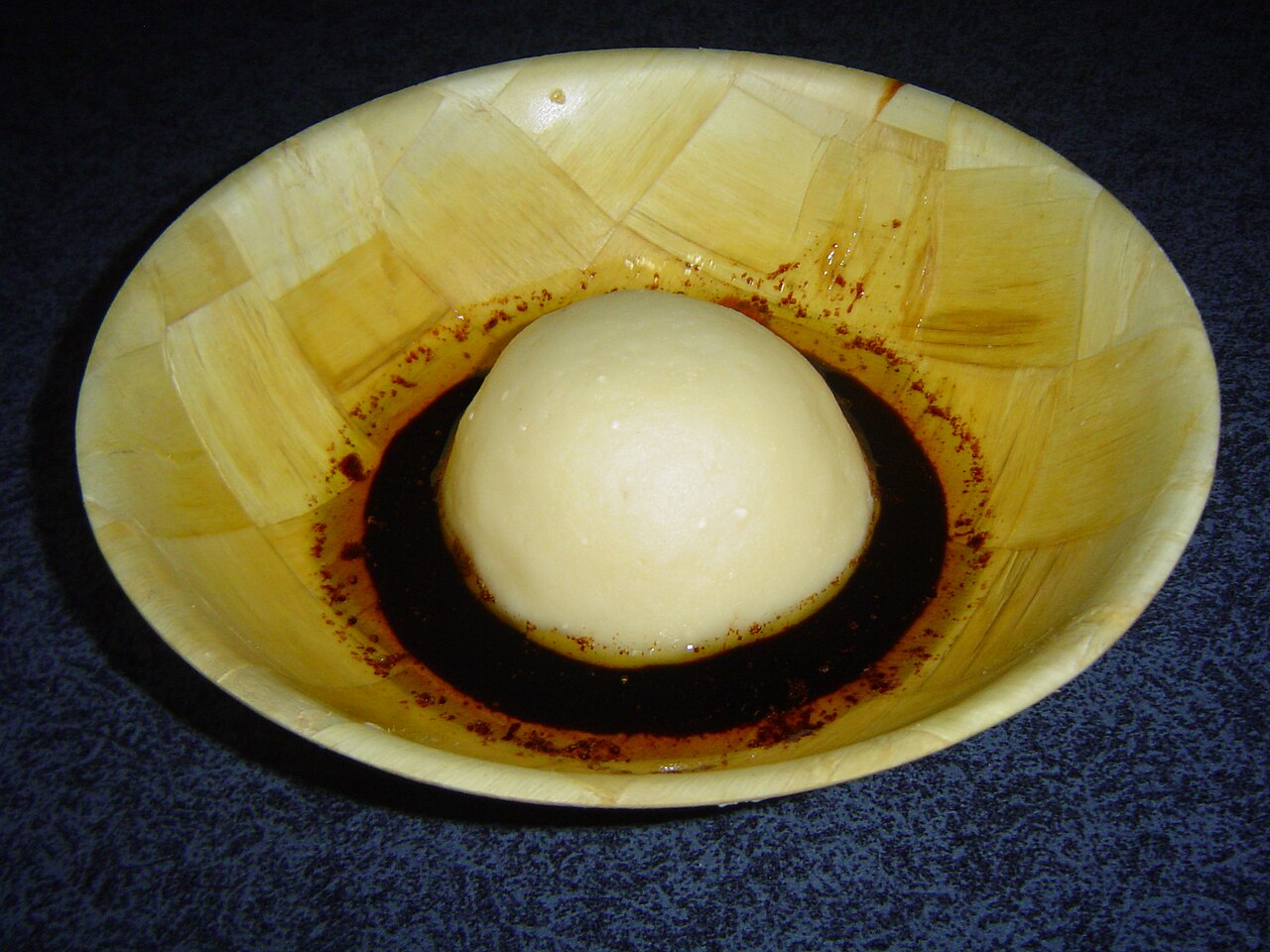
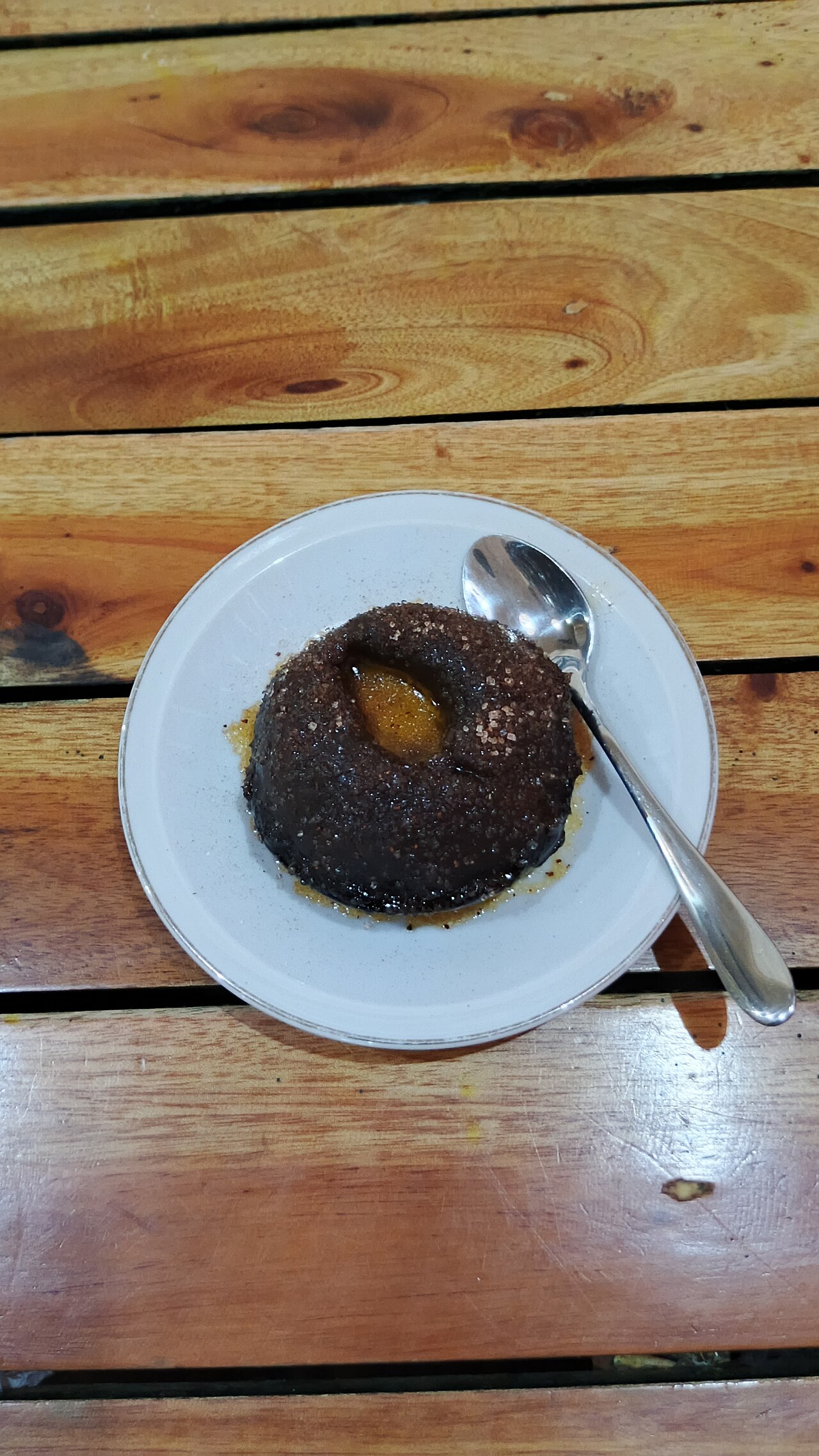
In Fez, Morocco, vendors sell squares of cold semolina pudding sprinkled with sugar and cinnamon, often eaten by children after school. The Libyan version is served with a sweet syrup—usually date or carob syrup (rub)—or honey, along with melted butter around the dough. In Palestine, asida (aseeda) is primarily a dessert, served with honey or date syrup, and sometimes topped with sautéed nuts and cinnamon for special occasions. A savory version made with stewed wheat berries and lamb is also prepared in at least one Palestinian village during mourning periods. In Tunisia, asida is served either with a honey-butter mixture or with hot chili pepper paste (harissa); the latter is more common later in the day, while the former is eaten earlier. In southern Tunisia, it is also commonly eaten with carob
- type
- Dish
- region
- Arab world, Middle East, Africa
- main_ingredients
- Wheat flour, water, butter or honey
- earliest_recipe
- 10th century Arabic cookbook by Ibn Sayyar al-Warraq
- associated_holidays
- Mawlid, Eid, 'aqīqah
- variations
- Morocco, Libya, Palestine, Tunisia, Yemen, Ethiopia, Sudan
Lore & Background
One of the earliest documented recipes for asida is found in a tenth century Arabic cookbook by Ibn Sayyar al-Warraq called Kitab al-Ṭabīḫ (The Book of Dishes), described as a thick pudding of dates cooked with clarified butter. A recipe also appears in an anonymous Hispano-Muslim cookbook dating to the 13th century. In the 13th and 14th centuries, in the mountainous Rif region of Morocco, flour from lightly grilled barley was used instead of wheat. Leo Africanus (c. 1465–1550) documented a recipe using argan seed oil. According to French scholar Maxime Rodinson, asida were typical foods among the Bedouin of pre-Islamic and, probably, later times.
Reader's Guide
Asida holds significance as a simple yet rich dish that spans centuries and cultures across the Arab world and Africa. Its earliest known recipe from the 10th century shows its deep historical roots, and it continues to be a staple in countries such as Sudan, Morocco, Libya, Algeria, Tunisia, Yemen, Ethiopia, Eritrea, and the Middle East. The dish is closely tied to religious holidays like Mawlid and Eid, as well as traditional ceremonies such as the 'aqīqah (the cutting of a newborn's hair seven days after birth). It is also traditionally served at breakfast and given to women in labor. Regional variations abound: in Libya it is served with date or carob syrup; in Tunisia with honey and butter or harissa; in Yemen with chili tomato paste or helba; in Ethiopia as genfo with spiced ghee; and in Sudan as a sorghum porridge with meat-and-tomato sauce. The dish's adaptability and enduring presence across diverse communities underscore its cultural importance.
Did You Know?
- The name asida is derived from the Arabic root عصد (ʿ-ṣ-d), associated with twisting or kneading.
- One of the earliest documented recipes for asida is from a 10th century Arabic cookbook by Ibn Sayyar al-Warraq.
- In the 13th and 14th centuries, a flour made from lightly grilled barley was used in the Rif region of Morocco.
- In Palestine, a savory version of asida consists of stewed wheat berries with lamb and is made at times of mourning.
Culinary Identity & The Art of Preparation
Asida is, at its core, an exercise in restraint. A handful of wheat flour is stirred into a pot of boiling water until the mixture thickens into a dense, cohesive lump of dough, a texture that draws comparisons to the West African staple fufu. No elaborate technique is required, yet the result is a dish that feels both humble and deeply satisfying. In Yemen, the preparation becomes almost ritualistic: wholemeal wheat is added in handfuls to a roaring pot, beaten vigorously with a large wooden spoon to prevent lumps, and the cook traditionally lowers the vessel to the floor, steadying it with their feet while stirring. The finished dough is shaped with bare, oiled hands and set into a wide wooden bowl. A well is pressed into the center, filled with a fiery chili-tomato paste or a fragrant fenugreek blend called helba, and a rich lamb or chicken stock is poured around the edges. Served steaming hot and eaten with fingers or a spoon, asida stands as a complete meal in itself, requiring nothing but boiled water, flour, and a pinch of salt to sustain.
Ritual, Ceremony & the Rhythm of Life
Far more than a mere food, asida threads through the most significant moments of Arab and North African life. It is a centerpiece of religious observances, appearing on tables during the celebration of Mawlid and the feasts of Eid. It also marks intimate personal milestones: in the tradition of the 'aqīqah, the ceremony held when a newborn's hair is cut seven days after birth, asida is prepared to honor the occasion. In Yemen, the dish is a staple during the fasting month of Ramadan, and in Sudan it enjoys particular popularity in the same period. Palestinians regard asida as both a comfort food and a marker of special occasions, while in at least one village a savory variant of stewed wheat berries and lamb is prepared specifically during times of mourning. Perhaps most tenderly, asida is traditionally offered to women in labor, a simple nourishment at a moment of great physical demand. In this way, the dish functions as a quiet thread connecting generations, binding the sacred and the personal in a single bowl of dough.
Ancient Roots & Scholarly Documentation
The name asida itself carries the memory of its making, derived from the Arabic root ʿ-ṣ-d, which evokes the physical act of twisting and kneading. The dish's deep antiquity is confirmed by the French scholar Maxime Rodinson, who noted that asida was a typical food among the Bedouin in pre-Islamic Arabia and likely continued in that role well into later centuries. The earliest surviving written recipe appears in the tenth-century cookbook Kitab al-Ṭabīḫ, authored by Ibn Sayyar al-Warraq, where asida is described as a thick pudding of dates cooked with clarified butter known as samn. A separate recipe surfaces in an anonymous Hispano-Muslim cookbook from the thirteenth century, testifying to the dish's reach across the Islamic world. In the mountainous Rif region of Morocco during the thirteenth and fourteenth centuries, cooks substituted a flour made from lightly grilled barley for the more common wheat. The Berber explorer Leo Africanus, known in the Muslim world as Hasan al-Wazan, documented a version enriched with argan seed oil, adding another layer to the dish's long and geographically diverse history.
A Tapestry of Regional Flavors
Though the basic concept of wheat flour and boiling water remains constant, asida transforms dramatically from one locale to the next. In the old medina of Fez, Morocco, street vendors offer cold squares of semolina pudding dusted with sugar and cinnamon, a treat children grab on their way home from school. Across the Mediterranean in Tunisia, the same dough is paired with honey and butter in the morning or a sharp harissa chili paste later in the day, while southern regions favor carob or date syrup. Libyan asida is drenched in sweet date or carob syrup and crowned with melted butter. In Ethiopia, the dish takes the name genfo and is served at breakfast alongside niter kibbeh, a fragrant clarified butter, or a bold berbere spice blend, yogurt, or even plain milk. Sudanese asida shifts its grain entirely, becoming a sorghum porridge typically accompanied by a hearty meat-and-tomato sauce. Each variation preserves the essential identity of the dish while imprinting the distinct palate of its homeland.
Gallery
Frequently Asked Questions
What is Asida?
Asida is a thick, doughy staple created by stirring wheat flour into boiling water until it forms a dense, cohesive mass. In Libyan kitchens it serves as both a humble everyday meal and a ceremonial dish.
What are the core ingredients of Asida?
The base recipe is just wheat flour and water, though many Libyan cooks finish the dough with a swirl of butter or a drizzle of honey for added richness. The result is a soft, chewy mass that pairs with savory or sweet accompaniments.
On what occasions do Libyans traditionally serve Asida?
It is a go-to dish for religious celebrations such as Mawlid and Eid, as well as family rituals like the 'aqīqah naming ceremony. Outside of special events it also appears on regular family tables as a filling, comforting meal.
What does Asida's texture remind people of?
Fans often compare it to fufu, the West African pounded-cassava dish, because of its dense, slightly elastic, pull-apart consistency. It is not a thin porridge but a solid, stretchy dough you tear into pieces by hand.
Is Asida unique to Libya or found elsewhere?
Variations of the dish appear across Morocco, Tunisia, Algeria, Sudan, Yemen, Ethiopia, and Palestine, each with local twists on seasoning or serving style. The earliest written recipe traces back to a 10th-century Arabic cookbook by Ibn Sayyar al-Warraq, underscoring how deep its regional roots run.
More in Libyan cuisine 1-22
Spotted an error? Know more?
This is a living reference — every entry is fact-audited, and reader corrections feed straight into our audit queue. Suggest an edit · See this site's audit record