Basbousa
A syrup-soaked semolina dessert found across many cultures.

Sandrus · CC BY-SA 3.0
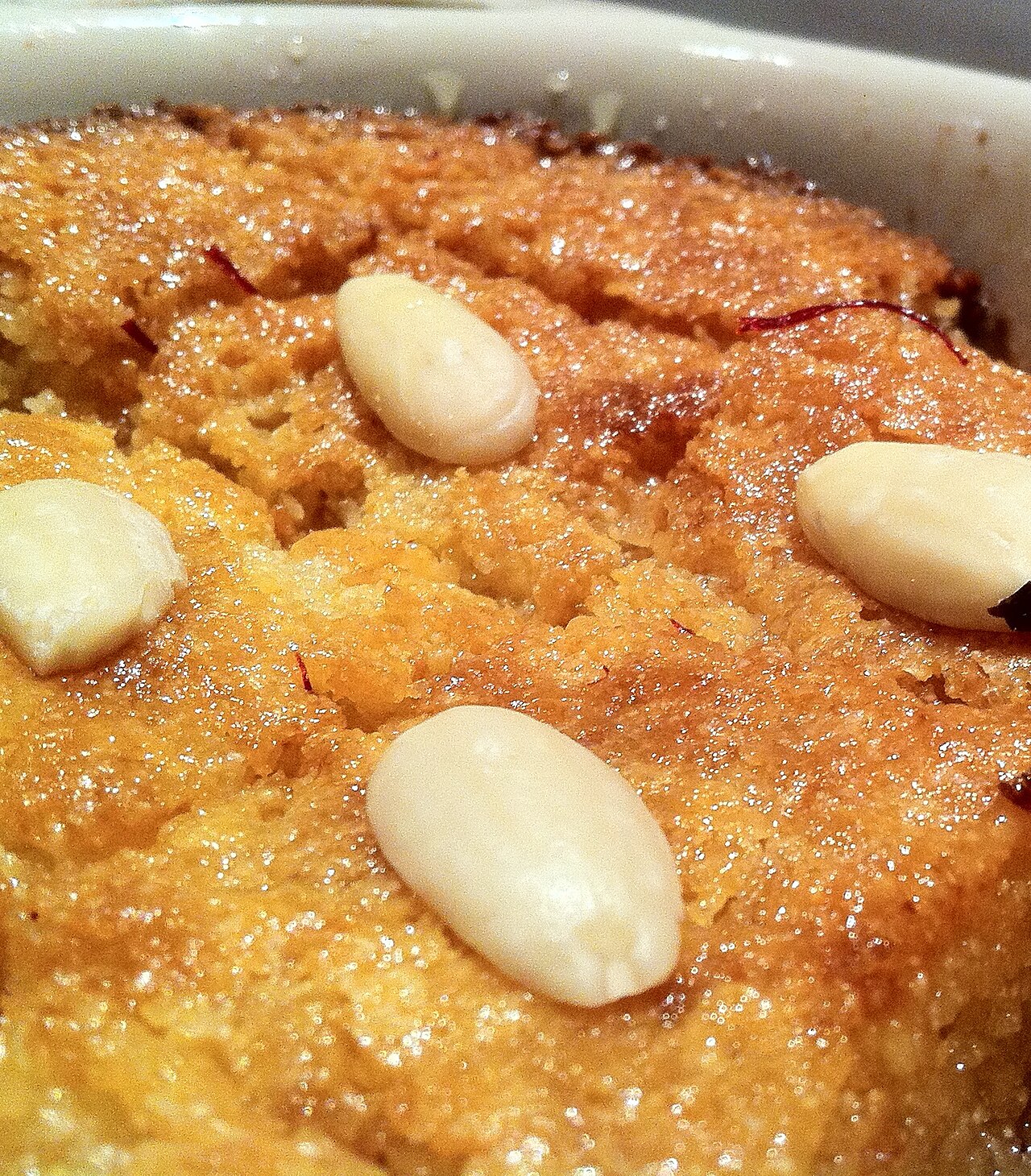
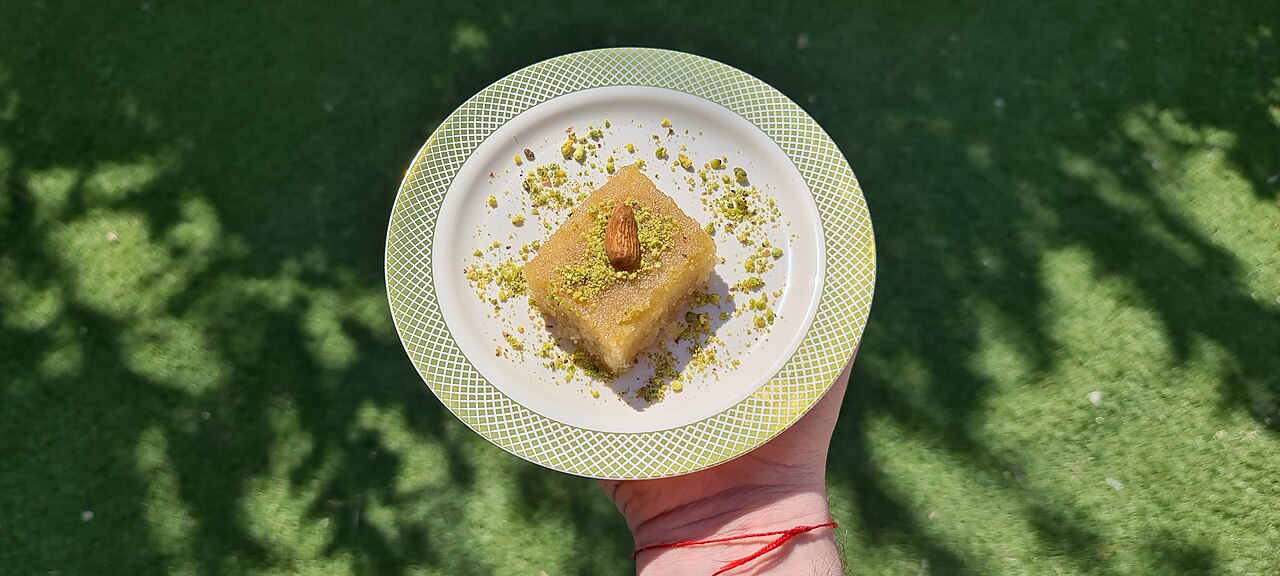
Basbousa is a sweet, syrup-soaked semolina dessert popular throughout the Middle East, North Africa, Caucasus and the Balkans. The semolina batter is baked in a sheet pan, then sweetened with sugar syrup and typically cut into diamond (lozenge) shapes or squares. Its history is traced by food historians to medieval and Ottoman-era recipes, with variations known under many names across regions.
- field
- Culinary history
- known_for
- Syrup-soaked semolina dessert
- region
- Middle East, North Africa, Caucasus, Balkans
- alternate_names
- Harisa, revani, nammoura, shamali, ravanija
Lore & Background
The Oxford Companion to Food (3rd edition) suggests that basbousa might have developed from a dish called ma'mounia, created around the 9th century Abbasid period. Ma'mounia was made by cooking rice in fat and syrup, later adapted to use semolina. Food historian Gil Marks notes it is possible that semolina syrup cakes evolved from toasted semolina sweets like suji halva. Ottoman revani, as described by food historian Priscilla Mary Işın, was made by whisking all ingredients together until frothy, including flour and many eggs, though street sellers used semolina and fewer eggs or none. A recipe for revani appears in the 1844 Ottoman Turkish cookbook Melceü't-Tabbâhîn, calling for baking semolina, butter, sugar, and eggs, then soaking in sugar syrup and cutting in 'baklava shapes.' The 1890 Ottoman Turkish to English dictionary by James Redhouse defined rewani as 'a kind of sponge-cake' and rewaniji as a seller of said cake.
Reader's Guide
Basbousa holds significance as a dessert that spans multiple culinary traditions, from the Middle East to the Balkans and North Africa. Its many names—basbousa, harisa, revani, nammoura, shamali, ravanija—reflect its widespread adoption and adaptation. The dessert's origins are debated, with food historians linking it to Abbasid-era ma'mounia, medieval Andalusian cookbooks, and Ottoman street food. Variations include the addition of coconut, rose water, citrus, eggs, or baking powder. Regional variants include Kuwaiti pastūsha with pistachios and orange flower water, Levantine basbousa bil ashta filled with clotted cream, Israeli basbousa eem tapuzim flavored with orange juice, Libyan basbousa bil tamr with date spread, Syrian hareesa nabaqia coated in clarified butter and pistachios, Palestinian anise or fenugreek versions, Sephardic tishpishti, and Algerian kalb el louz with almond flour. In Southeast Europe, Turkish revani is typically flavored with citrus, Albanian shendetlie is a honey and walnut cake, and Greek/Turkish şambali uses yogurt and semolina. The dessert's legacy lies in its ability to unify diverse cultures through a shared sweet preparation, while each region adds its own local ingredients and name.
Did You Know?
- Basbousa is also known as harisa or revani, and is popular in the Middle East, North Africa, Caucasus and the Balkans.
- The Oxford Companion to Food suggests basbousa might have developed from a 9th century Abbasid dish called ma'mounia.
- A recipe for revani appears in the 1844 Ottoman Turkish cookbook Melceü't-Tabbâhîn.
- The name basbousa is believed by some to derive from a colloquial Arabic expression meaning 'just a kiss'.
A Millennium in the Making
The lineage of basbousa reaches back at least a thousand years. The Oxford Companion to Food proposes that the dessert may have grown out of ma'mounia, a 9th-century Abbasid-era preparation in which rice was cooked in fat and syrup. Food historian Gil Marks offers a separate thread, suggesting that semolina syrup cakes descended from toasted semolina confections such as suji halva, given semolina's long-standing role in Middle Eastern pastries and puddings. Priscilla Mary Işın located a comparable recipe in a 13th-century Arabic-language cookbook from Al-Andalus, which noted the dessert was prepared in the region of Constantinople. She also observed that Ottoman revani required whisking all ingredients until frothy, with flour and a generous quantity of eggs, while street vendors substituted semolina and used fewer or no eggs at all. Chef Arto Der Haroutunian has argued that the Byzantine Empire played a key role in spreading revani across Anatolia and the Balkans. By the 19th century the dessert was firmly documented: the 1844 Ottoman cookbook Melceü't-Tabbâhîn described baking a semolina, butter, sugar, and egg mixture before soaking it in syrup and cutting it into baklava-like shapes, and James Redhouse's 1890 dictionary defined rewani as a kind of sponge-cake.
One Dessert, a Dozen Names
Few sweets carry as many regional identities as this syrup-soaked semolina cake. In Arabic-speaking areas it appears as basbūsah, harīsa, or nammoura; in Turkish and Albanian it is revani or revanija; in Greek, revaní; in Bulgarian, revane; in Armenian and Cypriot Greek, shamali; in Somali, basbuusa; and in Macedonian, ravanija. The etymology itself remains debated. Some trace basbousa to a colloquial Arabic expression meaning "just a kiss." Syrian historian Khayr al-Din al-Asadi, however, linked the name to the Arabic verb bas, meaning "to mix," and connected namoura to namr, "tiger," citing the dessert's coloring. In Turkish, revani is said to derive from the Persian word for oil or butter, though others claim it comes from "Revan," the Turkish name for Yerevan, supposedly to commemorate Sultan Murad IV's conquest of that city. Şambali, popular in Greece and İzmir, is also called "Damascus dessert" or "Damascus honey," since Şam is the Turkish word for Damascus. In the Levant the cake is often called hareesa, a name that should not be confused with the North African spicy red sauce of the same spelling.
A Canvas for Regional Flavor
The basic formula of semolina and sugar syrup serves as a remarkably flexible foundation. In the Levant and Egypt, basbousa bil ashta hides a layer of qishta, a milk clotted cream, inside the cake. Libyan bakers sandwich date spread between two semolina layers in basbousa bil tamr. Along Israel's coast, basbousa eem tapuzim borrows its flavor from orange juice. Palestinian traditions contribute hilbeh seasoned with fenugreek seeds, anise hareeseh, and qizha pie flavored with nigella seed paste. The Syrian city of Al-Nabek claims hareesa nabaqia, a version coated in smen, clarified butter, and crushed pistachios. Kuwait's pastūsha, a creation of the 2010s, distinguishes itself with finely ground pistachios and orange flower water. Algeria offers kalb el louz, a semolina cake enriched with almond flour. Across the Mediterranean, Turkish revani takes on citrus juice, Albanian shendetlie blends honey with walnuts, and Şambali in Greece and İzmir combines syrup, yogurt, and semolina. Sephardic Jewish communities preserve tishpishti, a name borrowed from the Turkish phrase "Tez Pişti," meaning "cooked quickly."
Simplicity, Absorption, and Texture
At its core, basbousa is a study in simplicity and absorption. A semolina batter is spread in a sheet pan and baked, then drenched in a sugar syrup that soaks through the porous crumb. The finished cake is most often cut into diamond or lozenge shapes, though squares are equally common. The 1844 Ottoman cookbook Melceü't-Tabbâhîn specified a mixture of semolina, butter, sugar, and eggs baked in an oven before the syrup bath, and instructed the baker to cut the result into "baklava shapes." James Redhouse's 1890 dictionary captured the final texture by defining rewani as a kind of sponge-cake, a description that speaks to how thoroughly the syrup penetrates the structure. Denser preparations incorporate eggs, while modern versions sometimes add baking powder for a lighter rise. Flavoring agents vary widely: coconut, rose water, and citrus are among the most common additions. The Oxford Companion to Food notes that the batter was cooked first and then soaked, a two-stage process that distinguishes basbousa from a single-bake sponge. Ottoman street vendors adapted the recipe by using semolina with fewer or no eggs, creating a leaner, more rustic version of the same fundamental dish.
Gallery

Frequently Asked Questions
Who is Basbousa?
Basbousa is a sweet, syrup-soaked semolina dessert that has been a staple of Libyan and broader North African and Middle Eastern cuisine for centuries. It is baked in a sheet pan, drenched in sugar syrup, and typically cut into diamond or square pieces.
What is Basbousa's role in the culinary world?
Basbousa serves as a beloved celebratory dessert across the Middle East, North Africa, the Caucasus, and the Balkans. Its defining trait is the rich, moist texture of the semolina batter combined with the sweet syrup that soaks it after baking.
Where does Basbousa's story begin?
Food historians trace the dish's origins to medieval and Ottoman-era recipes, giving it deep historical roots in the region. Over time it spread across many cultures, each developing its own local variation.
What are Basbousa's alternate names?
Depending on the region, the dessert is also called Harisa, revani, nammoura, shamali, or ravanija. These different names reflect how the recipe traveled and adapted across distinct culinary traditions.
How does Basbousa's story end?
Basbousa's tale concludes at the table, where the baked cake is sliced into lozenge or square shapes and served still glistening with its sweet syrup. It is most often enjoyed as a post-meal dessert or as a treat during family gatherings and celebrations.
More in Libyan cuisine 1-22
Spotted an error? Know more?
This is a living reference — every entry is fact-audited, and reader corrections feed straight into our audit queue. Suggest an edit · See this site's audit record