Libyan tea
A strong Maghrebi tea variant served in three courses with foam.

Mhmd.abdrzg · CC BY-SA 4.0
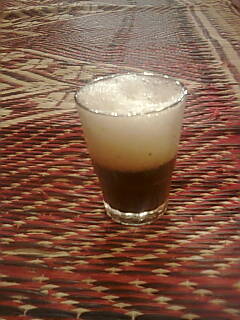
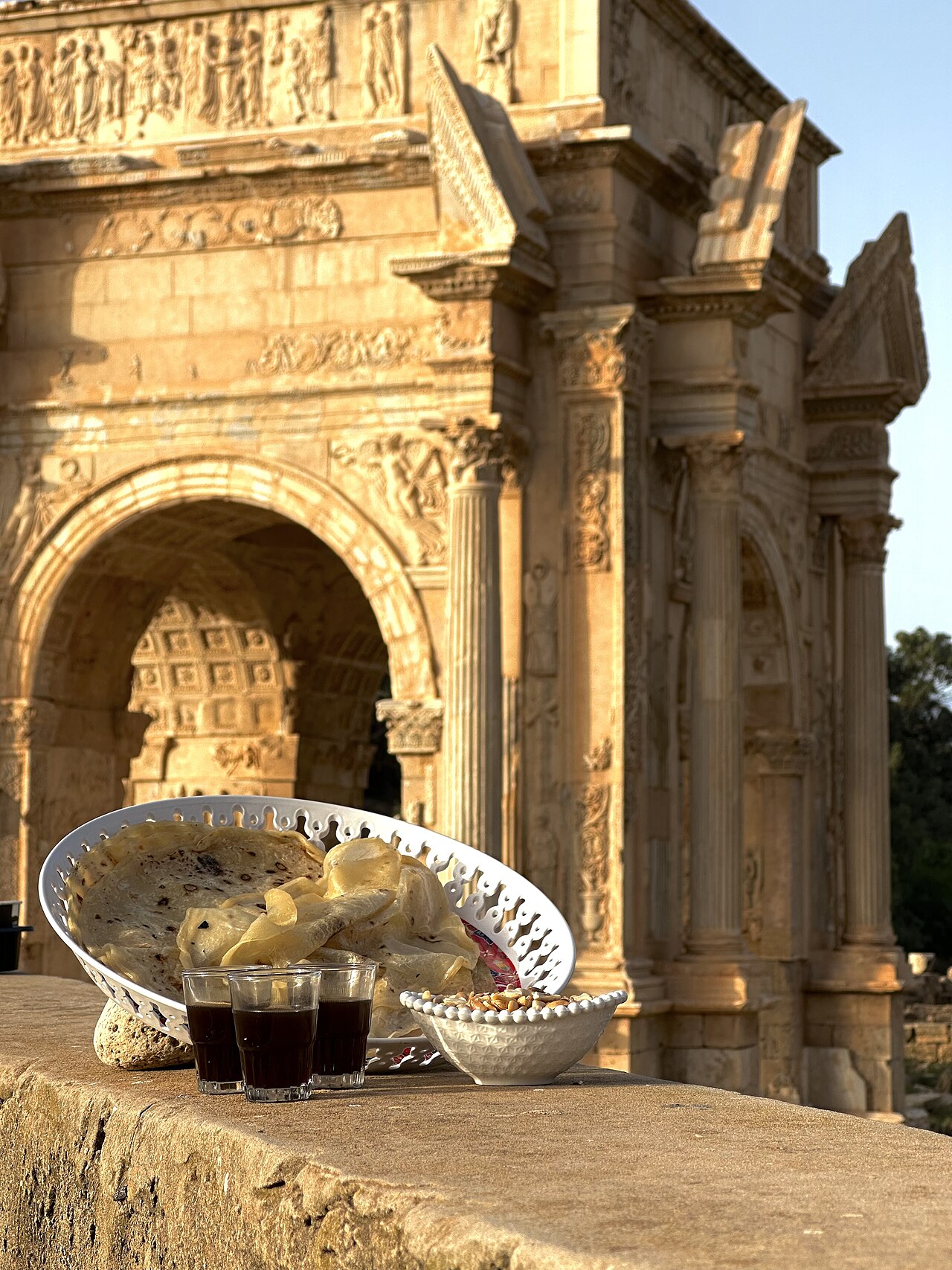
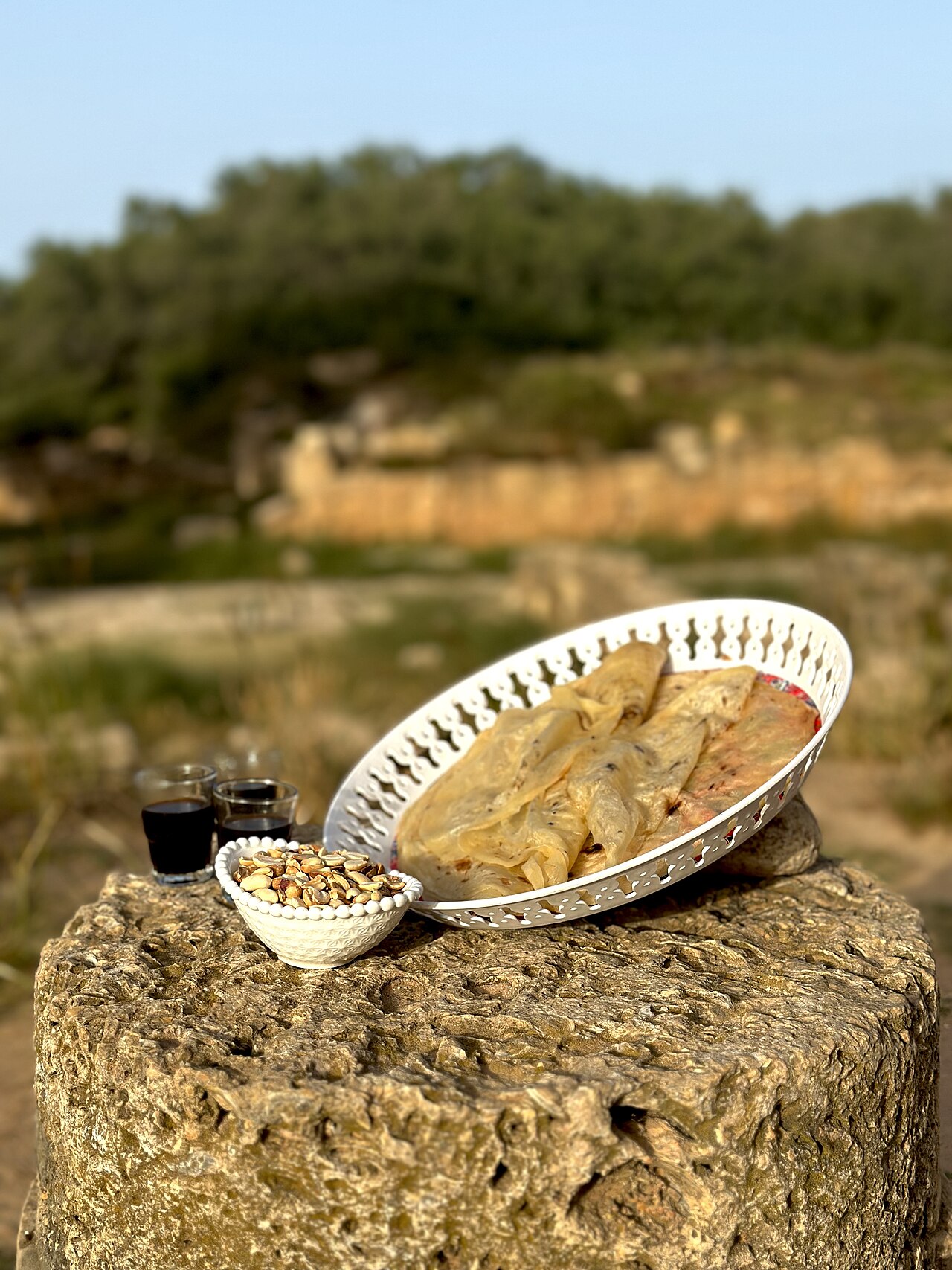
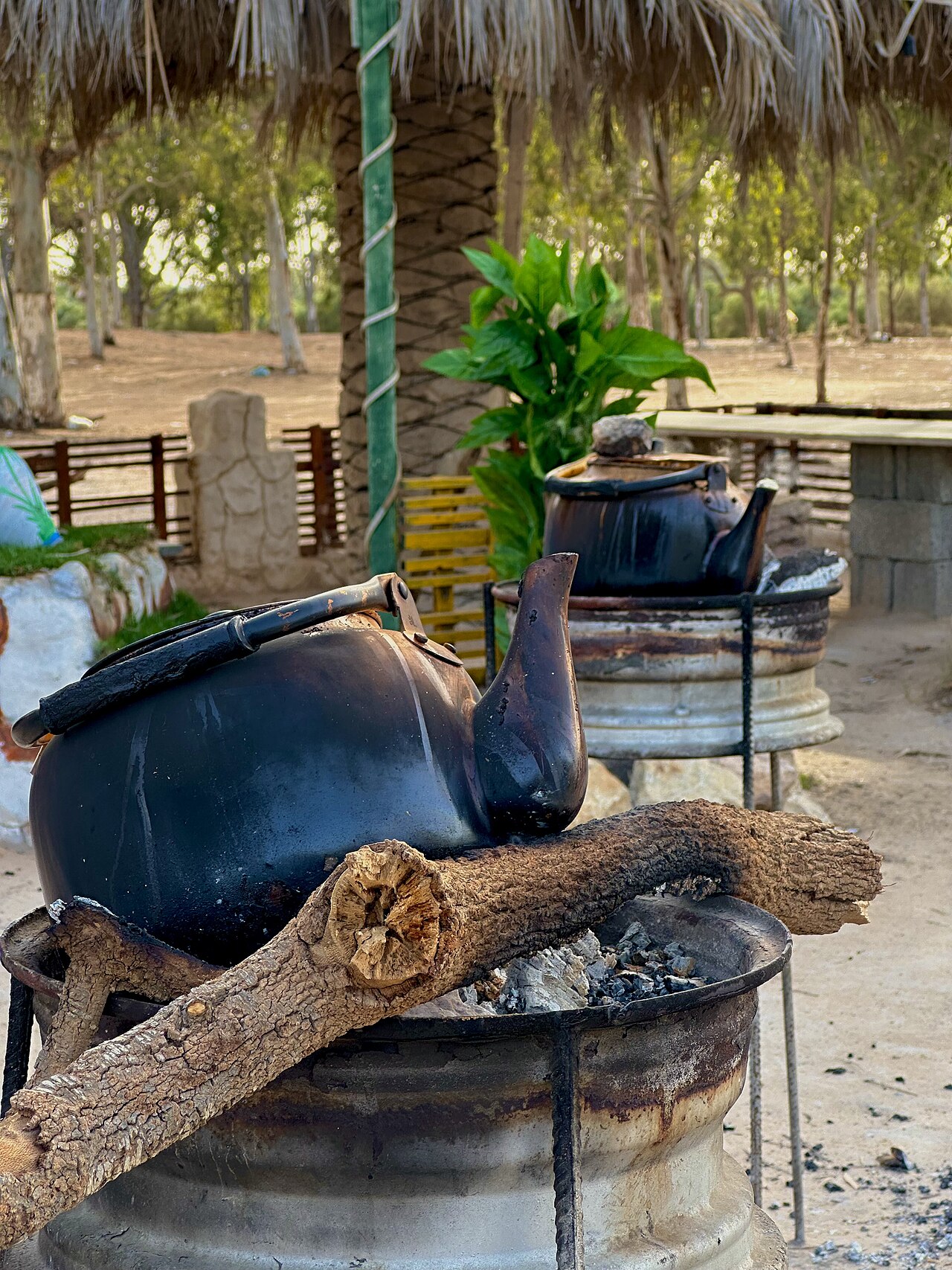
Libyan tea is a strong drink made by boiling loose tea leaves, using a specific set of stainless steel utensils, and served in small glass cups. While it is a type of Maghrebi tea and shares the same basic preparation method, its presentation sets it apart. The tea is typically served in three rounds, with the final course including boiled skinless peanuts or almonds. Mint or basil may be added for flavor. The preparation begins with an unsweetened brew to encourage foam formation, and each finished cup features a layer of yellowish foam on top.
This tea is traditionally presented as part of a ceremonial ritual called Shahi or Atay. The ceremony requires a distinctive stainless steel set that includes a teapot, a kettle, serving trays, glass cups, and sugar containers. Historically, an incense burner was also part of the set, highlighting the ritual’s role as a formal gesture of hospitality.
- type
- Beverage
- origin
- Libya
- variant_of
- Maghrebi tea
- serving_style
- Three courses
- key_utensils
- Stainless steel teapot, kettle, trays, glass cups, sugar containers
- distinctive_feature
- Yellowish foam layer on top
Lore & Background
Libyan tea is traditionally served as part of a ceremonial presentation known as Shahi or Atay. This ritual involves the use of a distinctive set of stainless steel utensils, including a teapot, a kettle, serving trays, glass cups, and containers for sugar. Historically, the set also included an incense burner, reflecting the ceremony's role as a formal expression of hospitality. The tea is initially prepared sugarless to allow for foam formation, and each cup when finally presented has a layer of yellowish foam on top.
Reader's Guide
Libyan tea holds significance as a variant of Maghrebi tea, distinguished by its ceremonial presentation and three-course serving style. The Shahi al-Alla ritual, using a specialized stainless steel utensil set that historically included an incense burner, underscores the beverage's role as a formal expression of hospitality. The characteristic yellowish foam on the tea's surface is a defining feature; according to one interpretation, it may have originated as a practical adaptation to desert conditions, serving as a protective layer to trap sand or dust particles. Over time, this functional feature became an established and valued element of the tea's traditional preparation and presentation. The inclusion of boiled skinless peanuts or almonds in the final round and the optional addition of mint or basil further distinguish Libyan tea from other Maghrebi teas. Its legacy lies in its unique blend of practicality and ceremony, reflecting both environmental adaptation and cultural tradition.
Did You Know?
- Libyan tea is usually served in three courses, with the last round including boiled skinless peanuts or almonds.
- The tea is traditionally served as part of a ceremonial presentation known as Shahi or Atay.
- Historically, the Shahi or Atay utensil set included an incense burner.
Regional Palates: A Mosaic of Cultural Layers
Libyan cuisine is the product of centuries of cross-cultural exchange, weaving together Amazigh, Arab, Ottoman, and Mediterranean threads into a tradition that shifts noticeably depending on where you stand in the country. Along the Mediterranean coast, especially around Tripoli, the table leans heavily on seafood, olive oil, grains, and fresh herbs, carrying a visible imprint of Italy's colonial period. Pasta is a household staple here, and a spiced one-pot pasta known as imbakbaka is a regular presence in family kitchens. Travel east, and that same dish is more commonly called macarona jariya, a small linguistic marker of regional identity. Further south, the culinary character turns more traditionally Arab and Amazigh, shaped by an arid landscape and nomadic heritage. Meals there often revolve around preserved ingredients—dried meats, fermented dairy, barley, and hardy legumes—while camel meat takes a more prominent role than it does in the north. Mutton, however, remains the most frequently consumed meat across the entire country, anchoring the diet from coast to desert.
The Spice Architecture
Flavor in Libyan cooking is built on a layered, almost architectural use of spices and aromatic condiments. At the base sits harissa, a chili paste combining chili peppers, garlic, caraway, and cumin, used as a versatile condiment across the country. Two signature blends carry the work of marinating meats and deepening stews: bzarr, which layers coriander, caraway, garlic, turmeric, ginger, and dried chili peppers, and bokharat, a warmer composition of black pepper, paprika, cumin, cloves, nutmeg, cinnamon, and cardamom. Beyond these blends, the pantry draws on rosemary, basil, fennel seed, aniseed, fenugreek, spearmint, allspice, saffron, and even rosebud. Liquid flavorings add another dimension—lemon juice, sugar syrup, and floral waters such as rose, orange blossom, jasmine, and geranium water appear throughout the cuisine. The result is a cooking tradition where a single dish can carry earthy, floral, and heat-driven notes simultaneously, creating a depth that distinguishes Libyan tables from those of neighboring regions.
Fire, Salt, and Patience: Meat Traditions
Meat preparation in Libya spans a wide spectrum, from ancient preservation techniques to open-flame grilling tied to religious celebration. Gideed is perhaps the most distinctive: cuts of lamb or camel are salted, sun-dried using an old method, and then stored submerged in olive oil for long-term use. This preserved meat is stirred into soups, couscous, and stews, particularly during colder months or when fresh meat is scarce. At the other end of the spectrum sits bourdeem, a primal cooking method in which lamb is slow-roasted in an underground pit lined with hot coals alongside onions, tomatoes, and potatoes. The technique yields deeply smoky, fall-apart tender meat and is reserved for special occasions like Eid al-Adha. Shwaya, the Libyan term for barbecue, also peaks during that festival, with lamb or mutton skewered or grilled over a small open fire to produce a distinct char. Kebab, kofta, and kibbeh round out the repertoire of prepared meats, while canned tuna serves as an accessible protein in school lunches and everyday meals.
The Center of the Table: Signature Dishes
Bazin stands as one of Libya's most recognizable dishes: barley flour and a touch of plain flour are boiled in salted water into a dense dough, then beaten with a specialized stick called a magraf and shaped into a smooth, rounded dome at the center of the plate. Around it pools a thick sauce built from fried onions, lamb, turmeric, cayenne, black pepper, fenugreek, sweet paprika, and tomato paste, sometimes enriched with potatoes and crowned with boiled eggs. Lemon wedges and amsyar—fresh or pickled chili peppers—complete the presentation. Imbakbaka, a one-pot pasta stew with meat in a spiced tomato sauce, carries a clear Italian minestrone lineage and is a winter favorite. Shakshouka, eggs poached in a sauce of tomatoes, peppers, onions, and spices, often uses aged mutton or lamb jerky as its protein base and is a beloved breakfast. Batata mubattana offers a different texture: fried potato slices stuffed with seasoned minced meat, then coated in egg and breadcrumbs. Couscous, steamed and served with lamb or chicken and vegetables, anchors festive and communal gatherings.
Gallery
Frequently Asked Questions
What is Libyan tea and how does it differ from other Maghrebi teas?
Libyan tea is a robust loose-leaf beverage originating in Libya that falls under the wider Maghrebi tea family. While the core brewing technique overlaps with its North African cousins, the way it is presented and styled gives it its own distinct identity.
How is Libyan tea traditionally served?
The drink is offered in three sequential rounds, each poured into small glass cups. The third and final round is paired with boiled skinless peanuts or almonds as a finishing touch.
Why does every cup of Libyan tea have foam on top?
The brew is initially prepared unsweetened specifically to coax a yellowish foam layer into forming. That foam sits atop each finished cup and is considered a hallmark of a properly made pot.
What equipment do you need to prepare Libyan tea?
A dedicated stainless steel set is used, typically including a teapot, kettle, serving trays, and sugar containers. The tea is then poured into small glass cups rather than ceramic or porcelain ones.
Can you flavor Libyan tea with herbs?
Mint or basil may be added to the brew for extra aroma and taste. The base, however, remains a strong boil of loose tea leaves with the signature foamed top.
More in Libyan cuisine 1-22
Spotted an error? Know more?
This is a living reference — every entry is fact-audited, and reader corrections feed straight into our audit queue. Suggest an edit · See this site's audit record