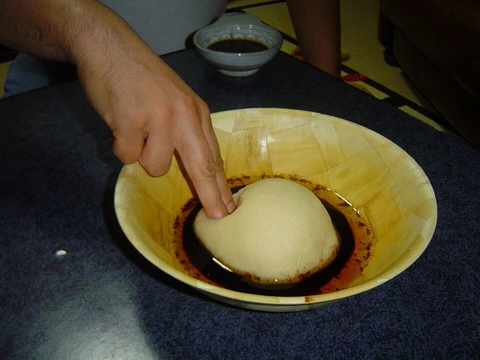
Brik
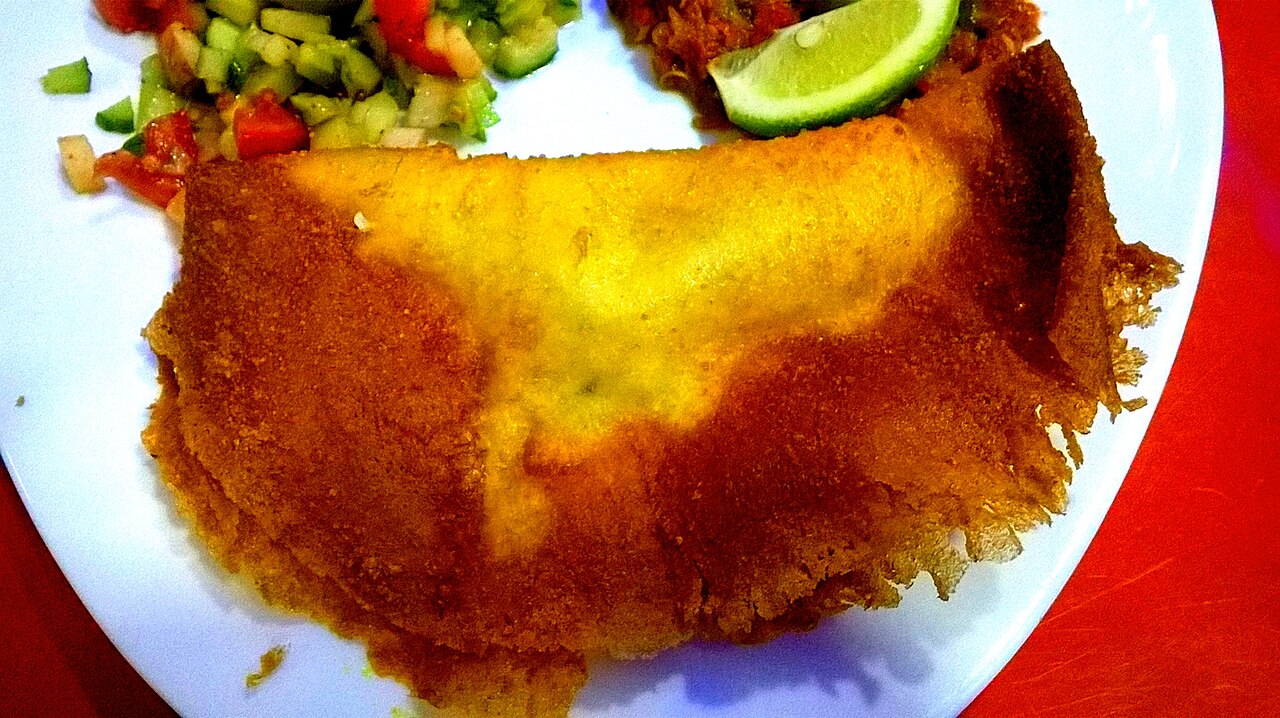
Tunisian deep-fried stuffed pastry with egg or tuna.

Marc Ryckaert ( MJJR ) · CC BY 2.5
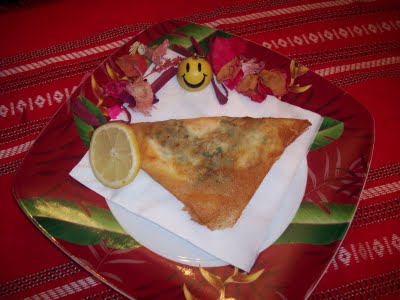
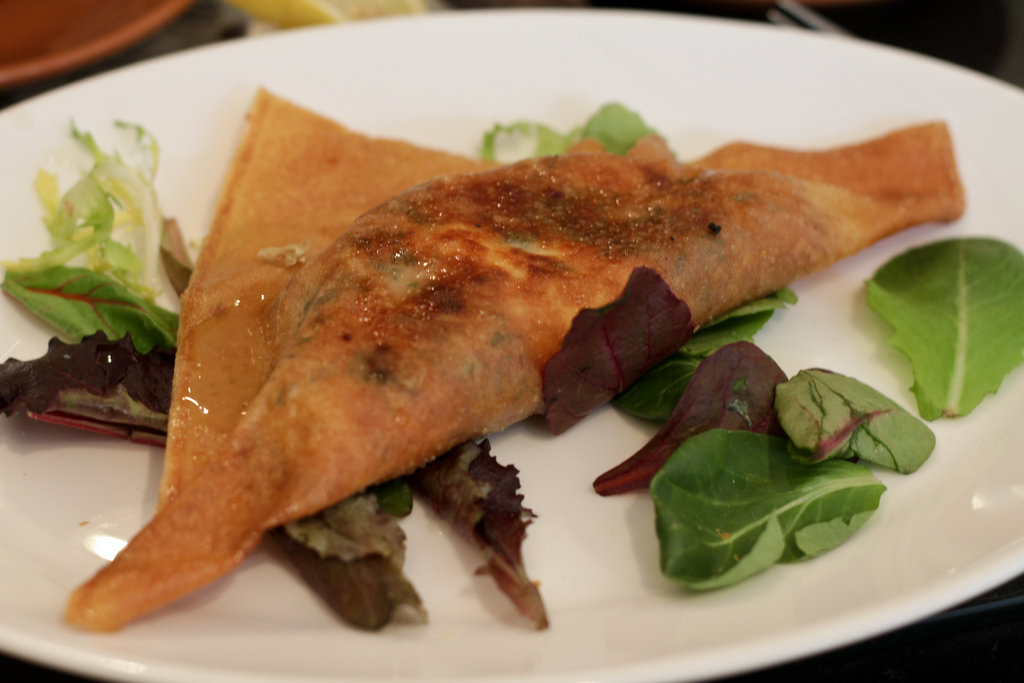
Brik (pronounced BREEK; بريك) is a beloved Tunisian specialty: a deep-fried pastry made from thin sheets of dough known as malsouka or warka. The most famous variety is egg brik, which wraps a whole egg with chopped onion, tuna, harissa, and parsley inside a triangular pocket. While similar stuffed pastries exist across North Africa, the Libyan version is typically called 'burek' or 'brik' (not 'bourek') and often refers to a different filled pastry (e.g., with meat or cheese) rather than the specific egg brik. Brik is far more iconic and widespread in Tunisia than elsewhere; it is not especially common in eastern Algeria.
The pastry itself is made by slapping a sticky lump of dough onto a hot, non-stick surface in overlapping circles to reach the desired size, then cooking it briefly. Typical fillings include tuna, ground meat, raw egg, chicken, or anchovies, often garnished with harissa, capers, or cheese. Its exact origins are unclear, but it is often linked to Ottoman influence (börek), which would place its emergence within the last 400 years or so. Across the Middle East, it goes by many names—bric, börek, burek, warqa, or malsouka—but every version shares a deep-fried pastry crust and a protein filling (such as tuna or egg). A classic Tunisian brik is prepared by folding the pastry into a triangle, stuffing it with mixed ingredients, and frying it for two to three minutes per side.
- field
- Cuisine
- known_for
- Deep-fried stuffed pastry, especially egg brik
- region
- North Africa (primarily Tunisia; also Algeria, Libya)
- alternate_names
- Burek, bric, börek, warqa, malsouka
Lore & Background
Brik pastry is made by slapping a sticky lump of dough onto a hot non-stick surface in overlapping circles to produce the desired size and cooked for a short amount of time. The brik dough sheets are called malsouka or warka. Typical fillings include tuna, ground meat, raw egg, chicken, or anchovies garnished with harissa, capers, or cheese. While similar pastries exist in Algeria and Libya, they are not identical to Tunisian brik; the Libyan version is typically called 'burek' or 'brik' (not 'bourek') and often features different fillings like meat or cheese. Brik is far more iconic and widespread in Tunisia than in Algeria, and it is not especially common in eastern Algeria.
Reader's Guide
Brik represents a significant culinary tradition in North Africa, particularly in Tunisia, Algeria, and Libya. Its importance lies in its versatility and cultural ubiquity, appearing in both everyday meals and special occasions. The dish demonstrates the region's adaptation of the broader borek family, using local ingredients like harissa, tuna, and capers. The preparation method—slapping dough on a hot surface to create thin sheets called malsouka or warka—is a distinctive technique. The classic Tunisian Brik is prepared by folding the outer pastry into triangle shapes, stuffing mixed ingredients, and frying for two to three minutes on each side. Despite unclear origins dating back at least 500 years, brik remains a popular street food and home-cooked dish, known by multiple names across the Middle East. Its legacy is preserved through regional variants, such as the French spin brik a l'oeuf, and its inclusion in lists of Middle Eastern dishes.
Did You Know?
- The best-known version is the egg brik, a whole egg in a triangular pastry pocket with chopped onion, tuna, harissa and parsley.
- Brik dough sheets are called malsouka or warka.
- In Libya, the dish is typically called 'burek' or 'brik' (not 'bourek') and often refers to a different filled pastry, such as with meat or cheese.
- The food's origins are unclear but are often linked to Ottoman influence (börek), which would place its emergence within the last 400 years or so.
Identity & Naming
Brik—pronounced "BREEK" and written بريك in Arabic—stands as the North African expression of the broader borek family, a stuffed pastry tradition that stretches across the Mediterranean and Middle East. What makes brik particularly fascinating is its refusal to settle on a single name. Depending on where you are, it might be called burek, bric, börek, warqa, or malsouka, yet the dish remains recognizably the same: a deep-fried pastry pocket cradling a protein filling. The most celebrated iteration is the egg brik, where a whole raw egg is tucked into a triangular wrapper alongside chopped onion, tuna, harissa, and parsley. In Algeria and Libya, the same dish appears under the name bourek (بوراك), carrying a slightly different shape but identical ingredients and technique. In Tunisia, the French colonial influence left its mark, with the classic preparation sometimes referred to as brik a l'oeuf. This linguistic and geographic fluidity speaks to a dish that belongs to many cultures at once.
The Pastry & Its Making
The heart of brik lies in its pastry, known locally as malsouka or warka. Rather than rolling out a sheet of dough in the conventional sense, the preparation involves a distinctive physical technique: a sticky lump of dough is slapped onto a hot non-stick surface, worked in overlapping circles until it reaches the desired size and thickness. This brief initial cooking on the surface sets the stage for what follows. The resulting thin sheet is then folded into a triangular shape, the signature silhouette of the dish. Fillings are tucked into the wrapper, and the assembled brik is heated in a frying pan for roughly two to three minutes on each side, producing a crisp, golden exterior while the interior ingredients cook through. The whole process is quick, hands-on, and deeply tactile—less a recipe followed from a book than a skill passed down through generations of kitchen practice. The result is a pastry that shatters at the edges yet stays tender enough to hold its savory contents.
Fillings & Regional Expressions
While the egg brik commands the most recognition, the dish is far from limited to a single filling. Tuna, ground meat, chicken, and anchovies all find their way into the triangular wrapper, often accompanied by harissa, capers, cheese, or a scattering of olives. In some preparations, the brik is served nestled inside a pita, lending it a handheld, street-food quality. The dish's geographic reach is notable: it is widespread in Eastern Algeria, particularly in the cities of Annaba and Costantina, and extends into Libya where it takes the bourek form. The common thread across every regional expression—whether in Tunisia, Algeria, or Libya—is the deep-fried pastry crust encasing a protein, a formula that has remained remarkably consistent. The fillings may shift with local taste and availability, but the structural logic of the dish, a crisp shell protecting a rich, savory center, endures as the defining principle.
History & Cultural Roots
Tracing the precise origins of brik proves nearly impossible, yet the evidence suggests a history stretching back at least five centuries. The dish occupies a curious position in culinary genealogy: it is the North African cousin of the broader Middle Eastern borek tradition, yet it has developed its own distinct identity, its own set of names, and its own regional loyalties. The fact that no single name has ever achieved universal dominance—brik, burek, bric, börek, warqa, malsouka all circulate simultaneously—hints at a dish that migrated, adapted, and multiplied rather than being invented in one place by one hand. The French colonial period left a visible imprint, most notably in the naming convention brik a l'oeuf, a French spin on what was already a deeply local preparation. Today, brik sits comfortably in the broader landscape of Middle Eastern and North African cuisine, a dish whose roots are ancient, whose name is plural, and whose appeal remains as immediate as the first crack of its fried crust.
Gallery
Frequently Asked Questions
What is brik in Libyan cuisine?
In Libya, brik (also spelled burek) refers to a deep-fried stuffed pastry made from very thin sheets of dough called malsouka or warka. It is a widely enjoyed North African snack, though the exact fillings and presentation shift from one country to the next.
How does Libyan brik differ from the famous Tunisian egg brik?
Tunisia's signature brik is a triangular pocket wrapping a whole egg together with tuna, chopped onion, harissa, and parsley. The Libyan version, by contrast, typically features meat or cheese fillings rather than that specific egg-and-tuna combination, even though both share the same basic dough technique.
What kind of dough is used to make brik?
Brik relies on paper-thin sheets of dough known locally as malsouka or warka. These delicate sheets are folded into pockets or layered over the filling, then deep-fried until crisp and golden.
What fillings go inside Libyan brik?
Seasoned meat and cheese are the most common fillings for brik in Libya, setting it apart from the egg-and-tuna pairing more closely tied to Tunisia. It is frequently served as a casual street-side snack or paired with a cup of tea.
Is brik originally a Libyan dish?
Brik is a shared North African pastry tradition found across Tunisia, Algeria, and Libya rather than the invention of any single country. It is most strongly identified with Tunisian cuisine, where the egg brik variety rose to a kind of national symbol.
More in Libyan cuisine 1-22
Spotted an error? Know more?
This is a living reference — every entry is fact-audited, and reader corrections feed straight into our audit queue. Suggest an edit · See this site's audit record