Bazin (bread)
Unleavened barley bread, a traditional Libyan national dish.

René Bazin (1853-1932) · Public domain
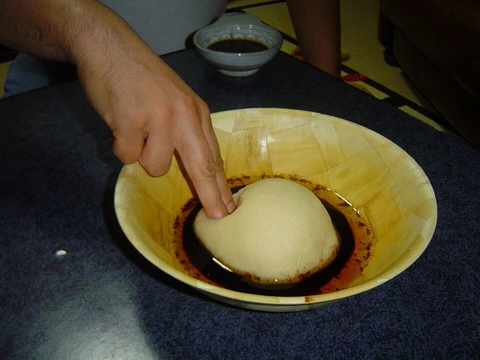
Bazin (Arabic: البازين, pronounced [baːˈziːn]), also known as Bazeen, Bézine, or Bazine, is an unleavened bread in the cuisine of Libya. It is prepared with barley, water, and salt, and is considered a traditional and national dish of Libya.
- type
- unleavened bread
- cuisine
- Libyan
- main ingredients
- barley flour, water, salt
- also known as
- Bazeen, Bézine, Bazine
- serving style
- typically eaten with the right hand, communally
Lore & Background
Bazin is made by boiling barley flour or wheat flour in water and then beating it to create a dough using a magraf, a unique stick designed for this purpose. The dough may then be placed in a pan and allowed to harden, after which it is baked or steamed. The salt contributes to the hardness of the bazin. It may also be prepared using whole wheat flour, olive oil, honey, and/or pepper as ingredients. The old way of making bazin involved forming the dough into palm-size cakes, cooking them in water in a special copper pot called a qidir, then breaking up the solid cakes with a large, flat, wooden ladle and mixing them into one large piece. Nowadays, a blender is often used, or the dough is cooked immediately in water like a pudding.
Reader's Guide
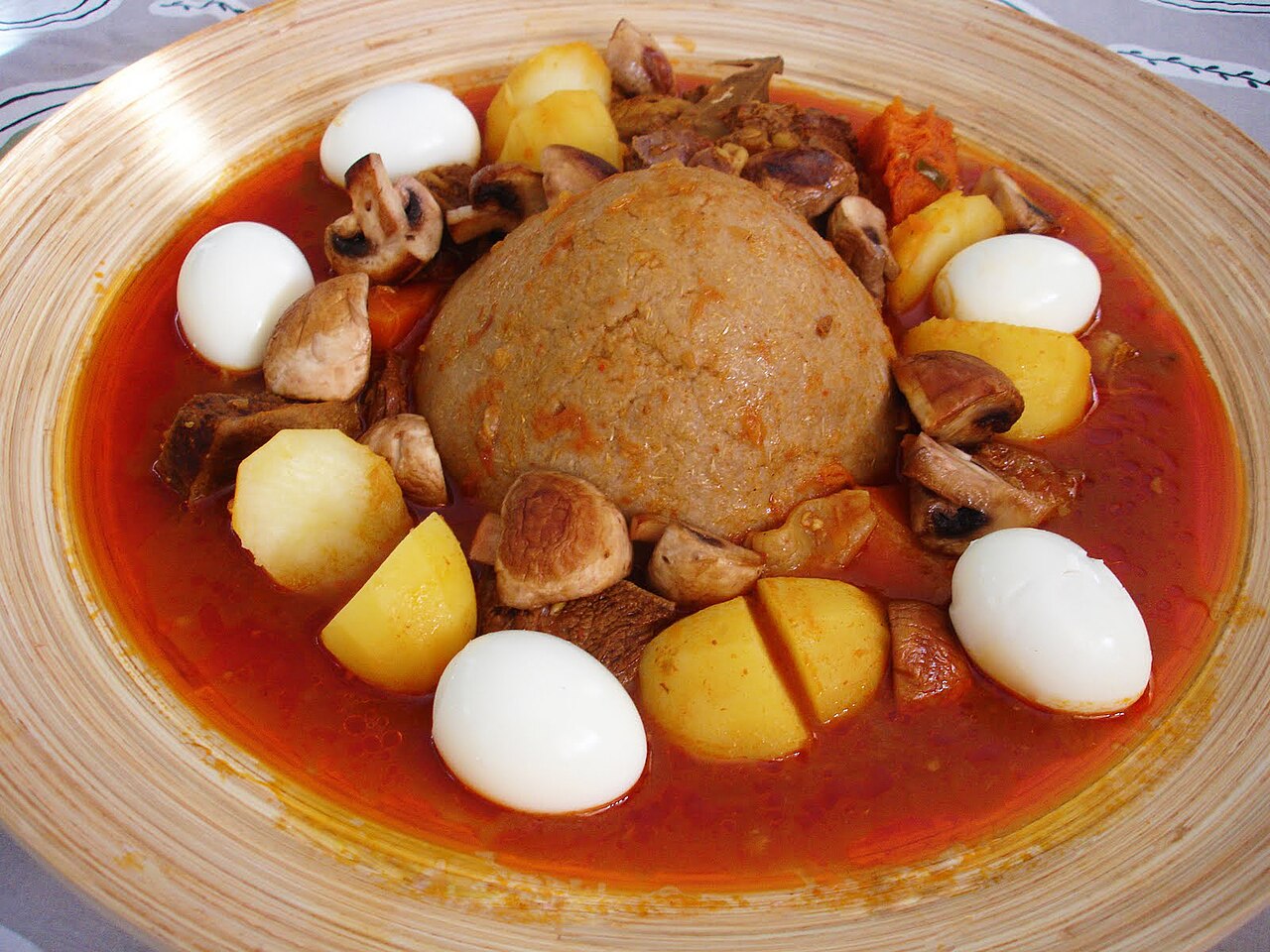
Bazin is a staple of Libyan cuisine, often described as a traditional and national dish. It is typically served with a tomato sauce, eggs, potatoes, and mutton or camel. The dough is shaped into a dome, and a tomato-based sauce or meat-and-potato stew is poured atop or around it, garnished with hard-boiled eggs. A raw egg may also be placed in the hot soup. Bazin may also be accompanied with a cooked pumpkin and tomato sauce mixture. When consumed, bazin is 'crumpled and eaten with the fingers,' usually with the right hand, and may be eaten communally. The sauce for bazin may be prepared by frying mutton with chopped onions, turmeric, salt, chilli powder, helba (fenugreek), sweet paprika, black pepper, and tomato paste. Broad beans, lentils, and potatoes may also be added. The dish is typically served with lemon and fresh or pickled (imsaiyar) chillies.
Did You Know?
- Bazin is prepared using a magraf, a unique stick designed for beating the dough.
- The old method of making bazin involved cooking barley cakes in a special copper pot called a qidir.
- Bazin is typically eaten with the right hand and may be consumed communally.
- The dish is often served with a sauce that may include helba (fenugreek) and imsaiyar (pickled chillies).
The Art of Making Bazin
Bazin is an unleavened bread rooted in Libyan culinary tradition, crafted from a deceptively simple trio of ingredients: barley flour (or wheat flour), water, and salt. The process begins by boiling the flour in water, after which the mixture is vigorously beaten into a cohesive dough using a magraf—a distinctive wooden stick designed specifically for this task. Once the dough achieves its consistency, it is transferred to a pan where it is allowed to set and harden before being finished through baking or steaming. The salt plays a crucial structural role, lending the bread its characteristic firmness. The final product carries a texture that ranges from paste-like to fully hardened, depending on preparation. While the classic recipe is austere, variations exist that incorporate whole wheat flour, olive oil, honey, or pepper, adding depth and complexity to the base. The bread goes by several names across regions and languages—Bazeen, Bézine, Bazine—reflecting its broad recognition beyond a single dialect or community.
Serving and the Communal Table
In Libyan homes, bazin takes center stage as the foundation of a hearty, shared meal. The dough is traditionally shaped into a dome, which then becomes the canvas for an array of accompaniments. A rich tomato-based sauce or a meat-and-potato stew is poured over or arranged around the dome, while hard-boiled eggs serve as garnish. In some preparations, a raw egg is cracked directly into the hot soup, allowing the heat to set it at the table. Mutton or camel meat, potatoes, and a cooked pumpkin-and-tomato mixture are common pairings. The dish is typically accompanied by lemon wedges and fresh or pickled chillies, known locally as imsiyar. Eating bazin is a tactile, communal affair: diners crumple the bread with their fingers, using the right hand, and share from a common plate. This hands-on, collective style of consumption reinforces bazin's role as a gathering food, binding families and guests around a single, generous spread.
From Copper Pot to Blender: A Shifting Tradition
The method of preparing bazin has evolved noticeably over time, though its essential character remains. In the older tradition, the dough was formed into small, palm-sized cakes and submerged in water within a special copper pot known as a qidir. As the barley cakes cooked and solidified, they were broken apart inside the pot using a large, flat wooden ladle, then mixed together into one unified mass. This hands-on, labor-intensive process gave the bread its distinctive texture and required skill to execute well. In contemporary kitchens, however, the technique has been streamlined. A blender now often replaces the wooden ladle, and in some cases the dough is simply cooked directly in water, yielding a result closer to a pudding in consistency. This shift from the qidir and ladle to modern appliances illustrates how Libyan home cooking adapts to convenience while preserving the dish's core identity as a boiled, beaten, unleavened bread.
A National Identity on the Plate
Bazin occupies a place of pride in Libyan food culture, frequently described as both a traditional dish and the national dish of Libya. Its Arabic name, al-bāzīn, and its various transliterations—Bazeen, Bézine, Bazine—signal a bread that transcends a single region or family recipe, belonging instead to the broader national palate. The act of eating it reinforces this collective identity: it is consumed communally, with diners gathering around a shared dome of dough and tearing pieces with their right hand. The dish sits alongside other well-known unleavened breads of Africa and the Middle East, such as asida and fufu, yet its specific combination of barley, the magraf, and the dome-and-sauce presentation marks it as distinctly Libyan. Whether prepared with the old copper qidir or a modern blender, bazin endures as a symbol of heritage, hospitality, and the simple, sustaining power of grain, water, and salt.
Gallery



Frequently Asked Questions
What is Bazin (bread)?
Bazin is an unleavened flatbread that sits at the heart of Libyan cuisine. It is made from just three simple ingredients—barley flour, water, and salt—and is widely recognized as a national dish of Libya.
What is Bazin (bread)'s role at the table?
Bazin functions as the communal centerpiece of a Libyan meal, traditionally torn apart and eaten by hand (specifically the right hand) rather than with utensils. It pairs with stews and other shared dishes as the staple you'd reach for first.
What are Bazin (bread)'s main ingredients?
The recipe is strikingly minimal: barley flour, water, and salt. No yeast or other leavening agent is used, which gives the bread its characteristic flat, dense texture.
What other names does Bazin (bread) go by?
Depending on the region or how the Arabic word is transliterated, you will also encounter the spellings Bazeen, Bézine, or Bazine. All of these refer to the same unleavened Libyan barley bread.
Why is Bazin (bread) important to Libyan culture?
Bazin is regarded as a traditional national dish, making it a recognizable symbol of Libya's culinary identity. Its communal serving style—shared by hand from a common plate—reinforces its role as a unifying food at family and social gatherings.
More in Libyan cuisine 1-22
Spotted an error? Know more?
This is a living reference — every entry is fact-audited, and reader corrections feed straight into our audit queue. Suggest an edit · See this site's audit record