Berber cuisine
Berber cuisine varies widely by region and lacks a single standard.

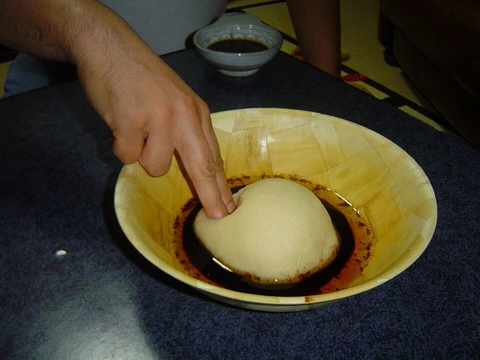
TheGirlsNY · CC BY-SA 2.0
Berber cuisine, also known as Amazigh cuisine, lacks a singular and standardized culinary framework. It encompasses a diverse range of traditional dishes influenced by the numerous flavors from distinct regions across North Africa. There is no consistent Berber cuisine, and it has been exposed to various influences, with meal choices shaped by local availability of foods and personal finances.
- field
- Cuisine
- region
- North Africa and West Africa (Mauritania)
- known_for
- Diverse regional dishes, some estimated to be more than a thousand years old
- dietary_law
- Follows same dietary laws and hygiene requirements as other Muslims
Lore & Background
Berber cuisine differs from one area to another within North Africa and West Africa (Mauritania). For this reason, every dish has a distinct identity and taste according to its specific region of origin in North Africa, with some dishes estimated to be more than a thousand years old. The Zayanes of the region of Khénifra around the Middle Atlas have a cuisine of a remarkable simplicity, based primarily on corn, barley, ewe's milk, goat cheese, butter, honey, meat, and game.
Reader's Guide
Berber cuisine is significant as a reflection of the diverse environments and histories of Berber communities across North Africa and Mauritania. Because it lacks a singular culinary framework, it illustrates how local food availability and personal finances shape traditional eating habits. The cuisine also adheres to the same dietary laws and hygiene requirements as other Muslims. Ken Albala noted that describing meals as typically Berber is impossible, as they are at best samples of what is eaten in different regions by Berber families. This diversity underscores the importance of regional identity in Berber culture, with some dishes estimated to be more than a thousand years old. The simplicity of the Zayanes' diet, based on corn, barley, dairy, honey, meat, and game, exemplifies how geography and resources directly influence culinary traditions.
Did You Know?
- Berber cuisine lacks a singular and standardized culinary framework.
- Some Berber dishes are estimated to be more than a thousand years old.
- The Zayanes of the Khénifra region base their cuisine on corn, barley, ewe's milk, goat cheese, butter, honey, meat, and game.
- Berbers follow the same dietary laws and hygiene requirements as other Muslims.
The Myth of a Single Berber Table
The idea of a single, unified Berber or Amazigh cuisine is, by all accounts, a misconception. Rather than a codified culinary tradition with fixed recipes and shared techniques, what exists is a sprawling collection of regional practices spread across North Africa and even into West Africa. No standardized framework governs what a Berber dish must be, and the cuisine has absorbed countless external influences over the centuries. Food historian Ken Albala captured this reality bluntly: calling any particular meal typically Berber is simply impossible. At most, one can point to what Berber families in a given locality happen to prepare. The absence of a singular identity is not a deficiency but a reflection of the extraordinary geographic and cultural range of Amazigh-speaking communities. What unites these traditions is not a recipe book but a shared linguistic and ethnic heritage, while the actual plates on the table vary as widely as the landscapes from which their ingredients are drawn.
A Mosaic of Regional Flavors
Because Berber communities stretch across multiple countries in North Africa and even reach into West Africa as far as Mauritania, the culinary landscape is anything but monolithic. Each locality develops its own distinct identity and taste profile, shaped by the particular terroir, climate, and available produce of that specific area. Some of these regional dishes carry an estimated history exceeding a thousand years, making them among the oldest continuous food traditions in the broader Mediterranean and Saharan world. The result is a patchwork in which a dish prepared in one valley may bear little resemblance to a similar preparation just a few hundred kilometers away. This geographic fragmentation means that any attempt to catalog Berber food as a single entity would inevitably flatten the rich particularity of each community's table. Instead, the cuisine is best understood as a constellation of local specialties, each rooted in its own soil, season, and ancestral knowledge, yet all belonging to the wider Amazigh cultural sphere.
Faith, Finance, and Foraging
The daily food choices of Berber families are governed by a practical intersection of religious obligation, economic reality, and local ecology. As Muslims, Berbers observe the same dietary laws and hygiene requirements that structure eating practices across the broader Islamic world, setting clear boundaries around what is permissible and how food is handled. Beyond these shared religious parameters, however, what lands on a family's plate is heavily determined by what the surrounding land can provide and what the household's finances can support. In a region where agriculture and pastoralism have long been the backbone of subsistence, the availability of particular grains, dairy products, or game in a given season directly dictates the menu. This means that even within a single village, two households of different means might prepare markedly different meals from the same local ingredients. The cuisine, in other words, is not a fixed repertoire but a living negotiation between faith, budget, and the rhythms of the natural world.
The Zayane Table: Simplicity in the Middle Atlas
Among the many regional expressions of Amazigh food culture, the cuisine of the Zayane people in the Khénifra area, nestled around the Middle Atlas mountains, stands out for its remarkable simplicity. Zayane cooking draws on a compact set of foundational ingredients: corn, barley, ewe's milk, goat cheese, butter, honey, meat, and game. This lean pantry reflects the pastoral and semi-agricultural economy of the highland zone, where livestock and hardy cereals have long been the staples of survival. The result is a cuisine defined by directness, each ingredient used in a way that lets its natural character shine without heavy elaboration. Yet within this apparent austerity lies a deep culinary logic: the interplay of grain, dairy, and protein creates a balanced, nourishing diet suited to the physical demands of mountain life. The Zayane table thus offers a vivid illustration of how a Berber community's food identity is forged by its immediate environment, producing a regional signature that is both humble and enduring.
Gallery
Frequently Asked Questions
What is Berber cuisine?
Berber cuisine, also called Amazigh cuisine, refers to the traditional food practices of the Berber peoples rather than one fixed set of recipes. It is a broad, regionally varied collection of cooking traditions rather than a single standardized style.
Where does Berber cuisine span geographically?
It covers North Africa and extends into West Africa, reaching as far as Mauritania. Dishes differ markedly from one area to the next based on local ingredients and resources.
What is Berber cuisine known for?
It is recognized for its wide variety of regional dishes, some estimated to be more than a thousand years old. The traditions reflect centuries of local adaptation rather than a single codified recipe set.
Does Berber cuisine follow specific dietary laws?
Yes, it observes the same Islamic dietary rules and hygiene standards as other Muslim culinary traditions in the region. Halal preparation and specific food-handling practices are standard across the communities.
Why is there no single unified 'Berber cuisine'?
Meal choices have always been shaped by what is locally available and what families can afford, so no consistent framework ever emerged. The cuisine has also absorbed many outside influences over time, making it inherently diverse rather than uniform.
More in Libyan cuisine 1-22
Spotted an error? Know more?
This is a living reference — every entry is fact-audited, and reader corrections feed straight into our audit queue. Suggest an edit · See this site's audit record